Showing posts with label posted by sean. Show all posts

Saturday, April 30, 2011

Fundamental Truths

by Sean Flannigan
Jon Krakauer, 2003, Under The Banner of Heaven

Continuing on the thread of books I've recently read, I will present a book wholly different than my last, and in the realm of nonfiction. This time I read Jon Krakauer's Under the Banner of Heaven: A Story of Violent Faith. The book's central focus is on the horrific murder of Brenda Lafferty and her infant child Erica. They were killed by Dan and Ron Lafferty, Brenda's brother-in-laws, who were commanded personally to do so by God, or their God at least, the one that speaks into their brains. The Lafferty brothers are Mormons, but that is too simple. They are fundamentalist Mormons, part of one of the ubiquitous sects of the dry West, dividing like cells, spawned by multitudes of differing revelations. From this one detestable act, described throughout the book from all available sources including the brothers themselves, Krakauer shines a light on the violent past and present of this relatively new pariah of a religion.

I say pariah, but in more recent years it has gained a great deal of traction. We've even had, and will have, a possible presidential contender who is of the faith. Mormonism is growing exponentially, much thanks owing to their responsibility to mimic the reproduction of rabbits. More children, more workers, more believers. They send missionaries out across the nation, and further into all the nooks and crannies of the world, suited-up in black and white and kindly asking for everyone's hand in theological union. This, though, wasn't the case at Mormonism's conception, inside an old hat with the face of Joseph Smith, who spoke with confidence of the existence of buried golden plates left by an angel called Moroni. The wild revelations of Joseph Smith needed time to lay down roots in the minds of the people.

It is that beginning, the creation of The Book of Mormon, and the ensuing struggle for legitimacy that Krakauer explores in an effort to explain the phenomenon of Mormonism's fundamentalist progeny. It seemed to me a very level analysis and history of a very guarded and temperamental faith, both the main Latter-Day Saints church and their unintentional polygamist offspring. Krakauer did a great deal of research in order to confidently write about an ever-present but not widely understood religion, using the Mormons' own well-recorded histories and religious texts as well as highly regarded books and personal interviews. The picture that emerges, from Joseph Smith's small band of followers to the more recent polygamist sects, is that of a extremely well-run and tremendously paranoid cult whose power structure at times resembles that of the mafia.

Personally, I couldn't put the book down. It was engrossing, suspenseful and disturbing; a story so strange it had to be real. Like all great sociological or anthropological studies, Under the Banner of Heaven illustrates the malleability of human consciousness under the sway of an ideological construct. A convincing origin story, or at least one which stirs the audience's heart, can evolve (or mutate) into something grander (or more monstrous), given the right circumstances. This is the case with Mormonism, born on the back of a crooked con artist (historically verified) and sold with the gusto of the best Evangelical pastor.

And this is not to single out this one particular religion. The most populous religions, the ones which rule the world's theological pie-charts, all have histories of great crookedness and horrid violence. None should be off the hook. The only difference is those who own much of the pie are the ones whose histories are just large enough to build a religion yet too sparse and ancient to build a case against. The truth is that no-one can scientifically say that any virgin births occurred, ever, or that the supposed product of said unverified event was reborn three days after he died in the company of criminals. The story put forth by Joseph Smith was crazy because it was crazy, but also because it was unfamiliar. Who is to say what is familiar isn't also improbable and crazy as well?

Love it or hate it, Under the Banner of Heaven is an undeniably interesting read and you will know more for having read it. So, go read it.

Sunday, March 27, 2011

Recently Read

by Sean Flannigan

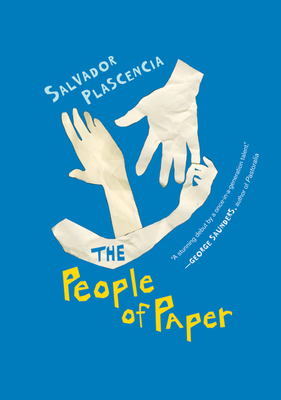
The People of Paper (McSweeney's Books, 2005)

A friend lent me this book by Salvador Plascencia, thought I'd like it, as he returned to me my copy of Kundera's Unbearable Lightness of Being. The book was overlarge where width and height were concerned, but a cursory glance through the relatively thin volume showed its post-modern flare, with ever-changing blocks of formatting, black shapes covering up some or all of certain narratives and small illustrations breaking up (and supposedly holding up) the story. These things excited me and I began reading it the next day.

The book centers around Federico de la Fe, father and husband, who must change the straw in their mattress each Tuesday by the river for all the uncontrolled piss he makes at night. His wife, Merced (who loves limes), chooses not to be pissed on anymore and leaves them both. The story springs from this sad point, the narrator changing with each column of text, from Little Merced (the daughter) to Rita Hayworth to Baby Nostradamus and more. Federico tempers his sadness by burning himself, which he hides from Little Merced (who also loves limes). This works for him and he always wears long sleeves. The main narrator is Saturn, that third-person omniscient whom Federico blames for everything, and whom Federico wages a war against with the carnation-chewing gang of the town of El Monte in Southern California. Saturn sees everything, hears everything, is making a history of their lives with his voyeurism.

Oh, yes, there are also the people of paper. A highly skilled origami artist began by reanimating his dead cat with paper organs and paper arteries before working his way up to human organs, and finally whole people of paper (whose fellators develop paper cuts on their tongues or wake up with soggy newspaper skin stuck to them overnight).

Needless to say, there are a great deal of creative elements at work in this book, so much so that to be brief about it is to sound a little ridiculous. His language is something like I have never read, totally casual yet thick with imagination, self-aware but not grievously meta. He brings the reader into a world occupied by obvious creation, occupied by the writer himself. It is a book mired in the sadness of loss and the futility of displaced anger. The characters and their struggles are tied to all who involve themselves in the story and illustrate how personal the act of writing fiction is.

Overall, I would recommend picking it up and giving it a try. It is something different, a little fantastical and very smart.

I will conclude with a small passage from the beginning that I just turned to:

Saturn

Saturn was aligned directly over Federico de la Fe, following him wherever he went, budging a half a space centimeter for every five hundred land miles de la Fe and Little Merced traveled. But once Federico de la Fe retreated into the lead shell, safely hiding from view and refusing to reemerge until the weight from the air was lifted, Saturn withdrew into his orbit and faded into the blur of the chalky galaxy.

Sunday, September 26, 2010

Read Banned Books!

by Sean Flannigan

This week, starting yesterday actually, is Banned Books Week, an annual educational affair sponsored by the American Library Association (ALA). It is a week of celebration for the intellectual freedom of thought, of being exposed to new ideas or being the one exposing. The right to information through free speech, as outlined in the first amendment, has had a difficult slog through the stubbornness of human ignorance and religious fundamentalism, and has only been protected by the tireless advocates of those freedoms, such as the American Civil Liberties Union (ACLU) and the ALA.

Throughout history, American and otherwise, books have been dashed from the shelves with gleeful fervor by the iron-fisted arbiters of our various republics and democracies. Anything deemed offensive, heretical, subversive or overly critical, among other things, by any ruling government or religious majority has been challenged and banned with great speed. Beyond these supposed threats to incumbent ruling classes and ideologies, there are also the books which are banned in order to shield the eyes of the innocent from anything untoward or obscene, as decided by the seemingly frightened and hyperbolic. This sort of backwards "burn the witch" mentality, one would assume, should be a thing of the past, something we have worked through and gotten over, like a bad flu or adolescence, but it is still alive and well today at a school or library near you. Many books have been challenged and banned in the U.S. and Canada in just the past year. You can find the PDF here. One from this list I would like to point out is the Merriam-Webster Collegiate Dictionary, which was pulled from the Menifee, California Union School District because a parent complained when their child came across the term "oral sex" whilst perusing the "O" section. The district is forming a committee to consider a permanent ban. Maybe this parent should scan the dictionary for any other entries they find unnecessary, in order that we could appropriately abridge that book of words. The past two decades have been rife with these sorts of challenges and bans, the most popular of which you can find listed here (2000-2009) and here (1990-1999).

Books, in case it's unclear, must be challenged before they are banned. Here are some visual aids concerning our recent past, provided by the ALA (click to enlarge):

Challenges by Year
Challenges by Institution

More information about challenges and bans in history can be found here, plus further statistics. Partial lists of banned books can be found here and here.

A popular and popularly banned book, To Kill a Mockingbird, is this year celebrating its 50th anniversary and has, as recently as November 2009 (aforementioned PDF, page 6), been banned in certain schools and libraries the country over. This gives proof that great ideas can withstand the tyranny of ignorance over time, even despite lingering righteous outrage. So, wish it a happy fiftieth and read it if you haven't. Libraries all over the U.S. are participating in Banned Books Week, which they call "Think for Yourself and Let Others Do the Same." Check out your local library for Banned Books Week events and displays. Go read some banned books. Think for yourself. Let others do the same.

Here are some further resources and opinions:

Thursday, July 8, 2010

Reading The New Yorker on the West Coast

by Sean Flannigan

Full of abstract comics, very specific advertisements aimed much to the East of me, and current-event-minded articles by big name intellectuals, The New Yorker arrives each week in my mailbox, with cover art to puzzle over while standing in my apartment building's foyer, scratching my head. A small joy explodes inside me. I look immediately inside the cover at the line-up. The first name I attempt to recognize is near the bottom, beside the word "FICTION" in those beautiful and regal New Yorker font characters. Near one of my favorite seats in the house sits a pile of them, The New Yorkers. I read through articles about new cancer drugs (Malcolm Gladwell, May 17, 2010), Balkan jewel thieves (David Samuels, April 12, 2010), the future of the electric car (Tad Friend, August 24, 2009) and the simple and paranoid genius of WikiLeaks (Raffi Khatchadourian, June 7, 2010), among other things. And, while these articles are extremely interesting and mind-expanding, the fiction is a true treat, the proverbial cherry atop the New Yorker sundae (or pie?).

As of late, I decided to look through my stack to personally appraise the stories I have enjoyed in the last few months. There are many. I narrowed and distilled my selection and will forthwith appraise and advertise them publicly, for possible enjoyment by others, by you. How about five? In no particular order, the following are stories I have liked and things I would like to say about them.

"In The South" by Salman Rushdie (May 18, 2009 issue)

I read this story July 3rd actually, out in the sun, while drinking a beer and listening to the groans of thousands of zombies (the Zombie Walk in Seattle's Fremont district, the purpose of which was to break the record for most zombies walking, I suppose). It, the story not the Zombie Walk, takes place in the South of India and concerns two old and crabby men, called Junior and Senior. They aren't related but one is seventeen days older than the other and they both share the same name, an unmentioned nomination which begins with the letter "V." The story begins, "The day that Junior fell down began like any other day..." followed by a poetic list of decorated descriptions which encapsulate the spirit of them and their region, including, "the traffic's tidal surges, ... a child's cry, a mother's rebuke, ... scarlet expectorations, ... the smell of strong sweet coffee..." Already a story of some variable impending doom. These old men live next to each other and speak nearly as one. They love each other in an unspoken way, with their spoken language being one of mutual dislike. Rushdie's prose, as always, is wonderfully poetic. I enjoyed the story itself but had more fun with the underlining of great sentences and phrases. I will list a few following this conclusion. Rushdie has written many great and lauded novels, two of the most notable being Midnight's Children and Satanic Verses. I have read only Satanic Verses, the book for which he had a fatwa placed upon his head, and I loved it. Midnight's Children is supposedly even better. I can't wait. I suggest him highly. Here are some lines and phrases:

"...after a lifetime of priding themselves on the quality of their teeth, they had both surrendered to the humiliating inevitability of dentures..."
"His days emptied out into tedious inaction."
"The great events of eight decades had managed to occur without any effort on his part to help them along."
"'We knew, let me say this, who we were. And now I am a shadow without a shadow to shadow. He who knew me knows nothing now, and therefore I am not known. What else, woman, is death?' 'The day you stop talking' she replied."

"Here We Aren't, So Quickly" by Jonathan Safran Foer (June 14 & 21, 2010 issue)

This I read on the couch. It was quickly read, not even two full pages. But good. Foer is a man of incredible prosaic fortitude. Vegetarian also. I like. This story is one of many stories in the 20 Under 40 issue of The New Yorker. It is about a relationship. You did this, I liked that. And on and on like that throughout. Through this simple literary mechanism he is able to weave a sweetly melancholic story of two people, a certain sad nostalgia. He folds the pronouns "I," "you," "we," they" and "he" back and forth over each other in a way that explains the lives of these people in so little space, sort of the main theme of poetic prose. Snippets will follow. Jonathan Safran Foer is most well-known from his book, Everything is Illuminated, and this is merely because it was optioned for a movie and it hit the big screen. Said movie was, as are nearly every book-to-screen adaptations, not as good as the book. The book was beautiful. His other book, Extremely Loud and Incredibly Close, was itself another wonderful piece of literature. Now, snippets:

"I was always never complaining, because confrontation was death to me, and because everything was pretty much always pretty much O.K. with me. You were not able to approach the ocean at night."
"They encouraged us to buy insurance. We had sex to have orgasms. You loved reupholstering."
"I was always watching movie trailers on my computer. You were always wiping surfaces. I was always hearing my father's laugh and never remembering his face. You broke everyone's heart until you suddenly couldn't. He suddenly drew, suddenly spoke, suddenly wrote, suddenly reasoned. One night I couldn't help him with his math. He got married."

"The TV" by Ben Loory (April 12, 2010 issue)

This I read while in the bath. Though it wouldn't top my list if it were ordered by how much I loved it, I still enjoyed it. "The TV" is a story about addiction, sort of. It is a story about observation v. action. Maybe. About laziness? Yes. It is essentially about a man who decides to call in sick and ends up watching his life being lived for him on the television. I don't want to give it away since it is a story of discovery, you and the man discovering what he is going to do next, both from the safety of your respective homes, you and the character. It was engrossing and I had to read it all in one sitting, or laying rather. Watch for this writer in the future, I say. Here is one segment for you:

"The man stays home from work again the next day, claiming to have the flu. The show is on again—his show. Yep, there he is, arriving at work. He is wearing the suit he bought last week at Macy’s. There he is, waving at the security guard he always waves at in the morning. Now he’s walking down the hallway toward his office, now he’s moving inside—there’s his desk, his chair, his in-box and his out-box, his stapler and his letter opener. It’s amazing; the man can hardly believe it. Onscreen, he sits down at his desk, looks at the clock, and begins to work."

"Extreme Solitude" by Jeffrey Eugenides (June 7, 2010 issue)

I read this in parts on my toilet. If you haven't read Middlesex yet, then go find a copy and read it soon. It is one of my favorite books. This story isn't that good by any means, but I enjoyed it. It stuck in my head a little and I love how he isn't afraid to venture casually into the world of sex. Centrally it concerns a girl, Madeleine, who finds herself falling for this mentholated-chew-spitting biology-philosophy double major named Leonard. They meet in Semiotics 211. Roland Barthes' "A Lover's Discourse" is the philosophical bible of love for this Madeleine. In the class she drudges through stacks of books of nearly incomprehensible theory — Derrida, Eco, Balzac, Handke, Van Vechten — before coming upon this Barthes, whose writing was finally beautiful and understandable. The two characters, Madeleine and Leonard, come from two entirely different backgrounds, rich and poor respectively, and it shows in their living situations, Madeleine with her weekly laundry day and Leonard with his empty and dirty apartment adorned with various milk crates for furniture. Their relationship consists mostly of talking, listening, eating and sex. She obsesses about love and he is much more philosophical and loose about such ideas. The story ends with what I see as an unresolved and confusing feeling. Lover's quarrel or the de facto end? The following is an extremely long sentence which should give a sense of the piece:

"But ever since the night they went back to Leonard’s place after watching “Amarcord” and started fooling around, when Madeleine found that instead of being turned off by physical stuff, as she often was with boys, instead of putting up with that or trying to overlook it, she’d spent the entire night worrying that she was turning Leonard off, worrying that her body wasn’t good enough, or that her breath was bad from the Caesar salad she’d unwisely ordered at dinner; worrying, too, about having suggested they order Martinis because of the way Leonard had sarcastically said, “Sure. Martinis. Let’s pretend we’re Salinger characters”; after having had, as a consequence of all this anxiety, pretty much no sexual pleasure, despite the perfectly respectable session they’d put together, and after Leonard (like every guy) had immediately fallen asleep, leaving her to lie awake stroking his head and vaguely hoping that she wouldn’t get a yeast infection, Madeleine asked herself if the fact that she’d just spent the whole night worrying wasn’t, in fact, a surefire sign that she was falling in love."

"Free Fruit For Young Widows" by Nathan Englander (May 17, 2010 issue)

I really loved this story and wasn't expecting that I would. I know nothing about this writer but if this story indicates his whole portfolio, he is good. It begins with an historical flashback, in the Sinai Desert around 1956. The French had previously been aligned with Egypt until it switched agitated with the Egyptian President's decision to take control of the Suez Canal, a major route for the West. This matters only because Israeli and Egyptian forces were adorned with the same French supplied outfits, and so couldn't tell who was who in the conflict. In the present of this story, a father is explaining to his son (both Israeli) why Professor Tendler doesn't have to pay for his fruit and vegetables from their stand. Tendler and the father (Shimmy Gezer) were in the military together during this 1956 happening wherein Tendler shoots and kills all of the soldiers sitting around Gezer at the outdoor mess, all of whom happened to be Egyptian. He saved his life. But he was a murderer. All the widows of slain soldiers also get free fruit, which the son could understand. Murder was different. He could have taken them prisoner. The father tries to explain the gray areas, context, and the son tries to understand yet thinks black and white, no context to draw from. Tendler survived the camps, hid in piles of dead bodies, scraped along as a ghost to survive to find a real life. How can one find morality in the face of such atrocity? I won't tell the whole story. It is very much worth reading.

"Etgar’s father explained the hazy morality of combat, the split-second decisions, the assessment of threat and response, the nature of percentages and absolutes. Shimmy did his best to make clear to his son that Israelis—in their nation of unfinished borders and unwritten constitution—were trapped in a gray space that was called real life."
"And from this pile of broken bodies that had been—prior to the American invasion—set to be burned, a rickety skeletal Tendler stared back. Professor Tendler stared and studied, and when he was sure that those soldiers were not Nazi soldiers he crawled out from his hiding place among the corpses, pushing and shoving those balsa-wood arms and legs aside."

These are some of the stories I gleaned from the pages of The New Yorker like precious gems. Many more await. You can find and read most of these stories and more at http://www.newyorker.com/fiction. Enjoy!

Monday, April 26, 2010

Walking and Talking and Going to a Reading About Walking and Talking

by Sean Flannigan

Flâneur, something Baudelaire defined loosely as a "gentleman stroller of city streets," or more directly and gender non-specifically, "a person who walks the city in order to experience it," is a term derived obviously from the French, those lackadaisical and aimless walkers. It is a term I had not had the pleasure of knowing until just days ago when I saw it on the "internet." It is a term that explains me in ways English simply doesn't provide for satisfactorily. Also, it bears a comfortable resemblance to my last name. This aforementioned "internet" also informed me of a reading that was going to take place at the newly located, local and independent bookstore, Elliott Bay Book Company, Saturday night at 7 pm.

Now, to divert attention from this reading for one moment, I will talk about the bookstore. This wonderful independent bookstore once lived in Pioneer Square, a little historic district in the south of downtown Seattle, in an old building with old wood floors and old wooden bookcases and old stairs made of wood. It was a comfortable place and the floor creaked a bit when you walked across it. I liked it and would often find myself there after a bout of flâneurism, sometimes buying something from the bargain section, sometimes not. Then it decided to close. It moved to the illustriously hip and gay and bar-ridden Capitol Hill, a flâneur's dream come true. To celebrate the arrival of Elliott Bay Books, Capitol Hill threw a party with a beer garden, food (from Via Tribunali pizza, Elliott Bay Cafe, and Oddfellows) and bands, all out in the closed off street in front. It was a beautiful sunny Seattle Summer-ish day and there were a lot of beautiful people strolling and eating and drinking, in celebration of books! I bought three books that day (Everyman and Exit Ghost by Philip Roth and Oracle Night by Paul Auster, both authors which you should read). The new location is better, I think, and still appropriately woody and old-seeming.

The reading took place below the bookstore in a musty basement with old books lined up along the wall behind the stage for effect. Although there were lights hanging everywhere about the old basement, it still seemed dark. Wooden chairs with blue cushions were set up in uncommitted rows and were sparsely occupied by people in groups of two or three, one chair in between like the unused urinal between men in public restrooms.

The book, Ten Walks/Two Talks, was written by two men named Andy Fitch and Jon Cotner. It was published by Ugly Duckling Presse, an independent writer-and-artist run press out of New York City. Beforehand, I overheard Jon Cotner talking to the girl who would be introducing them and telling her that she need not say that Andy is not here, stuck in Wyoming in the snow, and that rather they would "maintain the illusion" that the man accompanying Jon to the stage was Andy. The two men, after a few minutes, were introduced and came up to stand behind the dais, at which time it was explained that the man beside him was, in fact, not Andy who was stuck in snow in Wyoming, but would be reading his parts nonetheless. I do not recall this man's name. The idea of the book was born from two projects, the first being Andy's alone, in which he walked in New York, aimlessly as it were, for sixty minutes on sixty consecutive days and would subsequently write sixty lines about each. The second project was the both of theirs and it involved the recording of forty-five minute talks in stationary places about New York, of which two were chosen and distilled for this book.

The reading included a segment of a walk, then some of talk one, then another segment of another walk, then some of talk two. They traded off line for line on the walks and each had a voice in the dialogue. Throughout the reading of the first walk, I assumed that they took these walks together and each wrote thirty lines. This I found not to be true. I wished that only one person read the lines of the walk, so that I could be sure if it were the content that I thought didn't flow or if it were just the back and forth dual nature of the reading. Either way, it didn't seem like it flowed poetically or in action. I like the images (there was one in which a woman got out of a car and clenched her butt muscles). It seemed like it could be successfully transmitted if singular in voice. As for the talks, I liked one but not the other. One occurred in Central Park and one in a natural foods market they call simply WF. The Central Park conversation seemed clipped and staged, very unlike real conversation, as if they were too aware of themselves and said pseudo-philosophical things in place of the normal fart jokes of lady ogling. They talked aesthetically about their surroundings and I couldn't seem to get interested in it. The second talk was better and much more like a regular dialogue, as they talked in the table-and-chairs area of their New York WF. It seemed, though, that these talks were nothing incredibly special besides the fact that they were recorded and published in an edited form. Couldn't many of us do the same thing?

All in all, I liked it and didn't. I liked the concept very much and wished that I, myself, had come up with and executed it. Walking and talking are such intertwined activities and both can be beneficially aimless. To see this in written form may change my mind, but I feel like it was like weak tea when you really want to taste it. Like weak and slightly pretentious tea. Nonetheless, check it out. I could be wrong.

Thursday, March 18, 2010

Read This Book

by Sean Flannigan

Jonathan Lethem, Motherless Brooklyn, 1999

Recently, I went to an event at the Sunset Tavern in which an author I hadn't yet read talked to The Stranger's Paul Constant about his work, his likes and the comic he was writing, about an obscure rarely seen superhero called Omega The Unknown from the mid-seventies. This author's name was Jonathan Lethem, one of a trove of talented New York writers such as two other Jonathans, Safran Foer and Ames, as well as Don DeLillo, Thomas Pynchon and Norman Mailer. I enjoyed the talk quite a lot and proceeded afterwards to gather up his books into my collection, my ever burgeoning collection.

Lethem is one of a number a great new writers who are making it OK to give a nod at comics or genre without referring to them as one's "guilty pleasures." These guilty-pleasure-people are insecure about their image and have not given credit where it was due for too many years. Lethem recently completed a ten-issue series of the comic Omega The Unknown, published in 2006, after being offered the chance to write any comic he wanted. Apparently this very obscure superhero made an impact on him as a young man. Omega is an alien prototypical creation with superhuman strength, some psychokinetic powers and a psychic rapport with other organic Protar beings (the race from the planet Protaris in the Regreb System in the Milky Way Galaxy). Pretty cool.

In the realm of full-length genuine literature, he lays claim to many published works, most notably Fortress of Solitude (heavy reference to Superman), Chronic City (most recently) and Motherless Brooklyn (the book I implore you to read).

I would implore you to read Motherless Brooklyn. It is good. The main character/narrator, Lionel Essrog, is a Tourettic New Yorker in the employ of a seedy small-time gangster named Frank Minna at a quote unquote detective agency. Lionel Essrog, whose name itself is a Tourettic linguistic feast, details his past with his fellow Minna Men from their beginnings at home for orphans to the point of Frank Minna's death, from which unfolds a detective story of a wholly different kind. The story at times references Philip Marlowe, the private detective at the center of Raymond Chandler's crime novel The Big Sleep, a highly praised novel which Time thought to put in their 100 Best Novels published after 1923. Lethem obviously recognizes his influences.

This book had me reading it at any two minutes I had available. Lethem's ability to create a world of language around this character for which language is the ultimate compulsion was astounding. This book and this author have joined the ranks of my highest shelf (which is where I keep the books I love the most, and where it will shoulder Milan Kundera, Paul Auster, Michael Chabon and Philip K. Dick). I suggest this book highly and I will be reading further Lethem books myself.

Thursday, January 28, 2010

Art and Lit in the Bronx

by Sean Flannigan

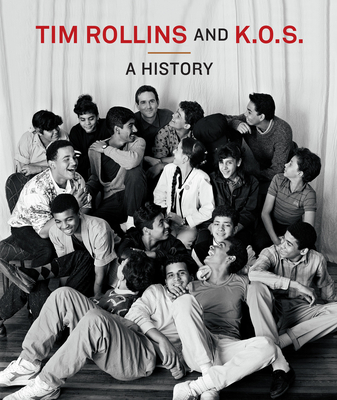
I have the distinguished honor of needling in on the "Fine Art" portion of this blog this time. The other day I went to the Frye Art Museum, located in the flamboyant and hipster-laden Capitol Hill portion of Seattle. This museum is always great, and always free. Upon entering, you encounter a movie playing before you can even hope to see any art. This was planned. I had the distinct urge to move on. That urge was stupid and I accomplished a very parental chastisement of this urge later on in the day. I watched the whole thing. It was longish and I was standing the entire time, but it was good. I nearly cried on two occasions, but as I looked around at some of the art people, they seemed stoic and rigid and their faces didn't even attempt at tears, so I sucked it into a ball in my stomach to wait patiently for my inevitable nervous breakdown years from now.

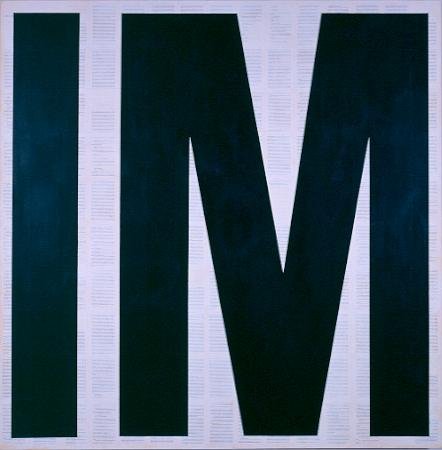
The show was called "Tim Rollins and K.O.S.: A History." Tim Rollins started what he called the "Art and Knowledge Workshop" in South Bronx, a place known for its poverty and violence, for at-risk kids who called themselves "Kids of Survival" or K.O.S. The idea was to read important literature (see where I come in here) and make art from its seeded themes. The film concerned a specific group of these at-risk kids, who would cycle through as they moved on to (hopefully) bigger and better things. With each book, they would take every page and paste them in order on the canvas. That was almost always the foundation. Tim was rough with the kids in a way that worked. He held them responsible for their own education, an education the he helped them achieve. I won't give away what happens or why I could have cried. If you can, go see it yourself (as this blog demands).

So, swallowing the intensity of the movie and shaking my legs out, I finally entered the art portion of the museum. This is where I realized how important it was that I saw that film. All these pieces which were given such thick histories involving the kids and their struggles were on display. Seeing all of it firsthand was amazing. Considering everything — the education, the synthesis between art and literature, the buoyancy it gave to their futures — I was moved. These pieces had a wonderful fourth dimension, meaning they weren't merely stretchers, canvas, print and paint, but also carried the weight of emotion and history, moved across time. These kids are now adults with something to show for their struggle.

Their pieces are part of many public collections including the Museum of Modern Art in New York, the Hirshhorn Museum and Sculpture Garden in Washington, D.C., the Museum of Fine Arts in Boston, and the Tate Gallery in London amongst others. They have also had many exhibitions all over the world and now including the Frye in Seattle. See it. It is worth it.

A Midsummer Night’s Dream XVII (after William Shakespeare), 2001
watercolor, fruit juice, aquaba paper, collage, mustard seed, xerography, rag paper on canvas
106.7 x 122 cm

The Scarlet Letter – The Prison Door (after Nathaniel Hawthorne), 1992-93
Acrylic and book pages on linen
54 1/8 x 77 3/16 x 1 3/4 "  

Invisible Man (after Ralph Ellison), 2008
Matte acrylic and book pages on canvas
72 x 72 inches

The book, published by MIT Press

Wednesday, January 6, 2010

Three Literary Standouts of this Last and Dreary Decade

by Sean Flannigan

I have no "Top Ten" for this decade, or for that matter, any decade. I usually take little note of when something was written, for the most part. New writers are easier to place in a time-line, though. It's happening now. You can't miss it. I can't say what is best of this decade because I haven't read all the books of this decade, or even just the notable ones. There are a lot. But, I have read some and a few were really amazing. So, of the books of this decade that I have read, I think that three really stand out.

In no particular order:

Middlesex by Jeffrey Eugenides

This beautifully and intricately written novel blew me away. There are few books, beyond even the last ten years, that operate on so many levels as this one. The character, being what Wikipedia tells me is called "intersexed", is already a strange and mysterious persona, the idea alone holding for the great majority of humanity a perspective none could entirely fathom. But, its masterfully woven threads of his/her embattled and sometimes incestuous Greek ancestry and his/her sexually-identified and narratorly present, and his description of the 5-alpha-reductase deficiency that Calliope suffers from, captures the reader fully and makes them feel if not always good at least a little weird, sad and obsessed (especially if that reader is me). It was also the recipient of the Pulitzer Prize in 2003. This is a novel of much heft, emotionally and physically. It is a great achievement and thus has made its mark within my three notables of this last decade.

The Amazing Adventures of Kavalier and Clay by Michael Chabon

Despite what many may assume, you do not have to be into comics to be into this book. It involves all of those many segments of human emotion, from the entirely squishy to the absolutely jagged. Sometimes I get pissed. On occasion I will cry. That sort of stuff. Plus the in between. This novel was also a winner of the Pulitzer Prize, in 2001. As with most Chabon novels, the story centers around a very Jewish protagonist, or rather two. Cousins, Kavalier (a recent refugee of Prague) and Klayman (as he is named before he renames himself something decidedly more catchy) come together in New York City. They find they both enjoy drawing and both adore that famous Jewish escapist, Harry Houdini. What follows is success and disappointment, pain and joy, confusion and clarity (and probably many other opposing themes). What stuck out, what really glued me to this book, was the characters. They were strongly developed, lived next to my bedside, in my wandering work-time thoughts, and past the point of reading them. I didn't want this book to end and I felt that those characters would survive beyond the last dot delivered by Mr. Chabon. I think that they have.

Everything is Illuminated by Jonathan Safran Foer

This was my latest read. Although it didn't win the Pulitzer prize, it did feature a Jewish protagonist. It also garnered much praise from many major publications and even some very well-known authors (Updike and Rushdie, to name two). The strands of this story are each as strong as the other. In one, the Ukrainian translator, Alex, relates his story of adventure in helping a Jewish-American traveler, who he refers to as the "hero," find and assemble pieces of his family's past, which he plans to write a novel about. Another strand is the novel-in-progress of this "hero" (whose name happens to be the same as the author's) in which he details this past, going back to his great-great-great-great-great grandmother, glamorized in many shades of the most beautiful magical realism. The third narrative is the letters from Alex to Jonathan, post-adventure, where he shares his critiques of Jonathan's novel-in-progress and the events going on in his own life, back in Ukraine. Having such varied perspectives, this novel shines with a nearly unrivaled imagination. It was as intriguing and funny as it was melancholy and sentimental. This author has a strength of prose and breadth of emotion that isn't found readily and should be, when found, held close and never let go. Everyone should read this.

So, there you are. These are the good books that I have liked this last and dreary decade. The best thing to do when a tyrant rules your country for most of a decade: read good books. And on a side note, these covers were the particular covers of the versions that I read. They hold a certain nostalgic significance. I can almost feel their weight and smell their pages. It feels good. Kindle will never take over. Nothing can beat having a physical book in your hand, and the wear that they endure is proof of their significance. OK, enjoy.